

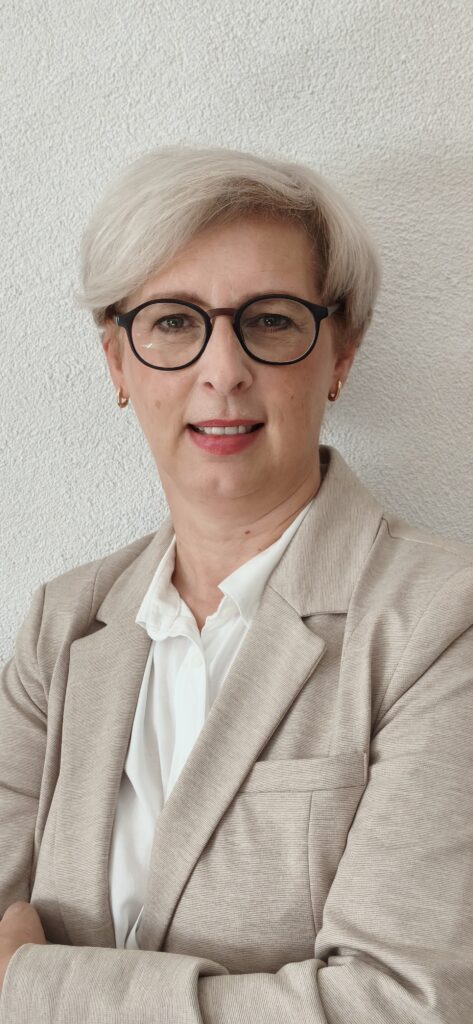
Simona Cvetko is the Founder of YUREA® and the creator of Recovery Experience Design™, an emerging experience-design methodology focused on an often-overlooked stage of the hospitality and wellness journey: what happens after an intensive experience. Her work explores how recovery can be intentionally designed through transitions, timing, environment, sensory conditions, hydration, comfort, privacy, and service touchpoints. Initially developed through her work with hydration-focused skincare, the concept has evolved into a broader framework applicable across hospitality, wellness, spa, and sports environments. In May 2026, she tested the Post-Exposure Recovery™ concept through a tennis pilot in Slovenia, using real-world observation and participant feedback to refine the methodology. Today, she is developing the framework through research, testing, and strategic hospitality partnerships.
Founder, YUREA® | Creator of Recovery Experience Design™ | Guest Experience & Service Design | Hospitality, Wellness & Sports
The Question Hidden After the Main Experience
Hospitality has become increasingly intentional about the experiences it creates. Treatments are structured, thermal environments are carefully considered, wellness programs are designed around specific outcomes, and sports facilities pay close attention to how people engage with the activity itself.
Simona Cvetko began looking at what happens once all of that ends.
Her starting point was simple: What happens to the guest after the main experience?
The question became more compelling as she looked across thermal exposure, physical activity, wellness treatments, and other intensive experiences. The experience may be finished operationally, but the guest is still transitioning physically and emotionally.
“If we design the experience so carefully, why don’t we design what happens after it with the same intention?”
That question became more than an observation. It became the foundation for Recovery Experience Design™, the developing methodology Cvetko is building around the idea that recovery should be intentionally designed as part of the guest journey rather than left as an unstructured period afterward.
From a Product Question to a Design Framework
Cvetko’s work initially took shape through YUREA®, a hydration-focused skincare proposition. But exploring what happens after exposure led her toward a much larger question.
Hydration was only one part of what a guest might need after an intensive experience.
There was also the transition itself. Where does the guest go? How quickly does the environment change? What happens to temperature, sound, lighting, privacy, comfort, and service? When should support be introduced, and how much guidance is actually useful?
The deeper Cvetko looked, the less the problem resembled a conventional skincare question and the more it looked like an experience-design problem.
That distinction is now central to how she positions her work. YUREA® provided an early product-based starting point in the development of the broader Recovery Experience Design™ framework. The framework itself, however, is deliberately independent of any product.
A hotel, spa, wellness destination, or sports environment should be able to apply the principles without necessarily using YUREA®.
That separation gives the idea greater scope. Cvetko is not simply asking what should be applied to the skin after an experience. She is asking how the entire period after the main experience should be considered and designed.
The Space Between One State and the Next
For Cvetko, recovery is not synonymous with adding a relaxation room, offering water, or placing a product at the end of a treatment.
Those elements can be valuable, but they do not automatically create a recovery experience.
The difference lies in how those elements connect.
Recovery Experience Design™ considers transitions, timing, environment, sensory pacing, hydration, comfort, privacy, and service touchpoints as parts of one sequence. Instead of asking only what amenities are available, the framework asks what the guest is transitioning from, what they may need next, and how the environment should respond.
“The recovery phase is still part of the experience.”
That philosophy also challenges the assumption that recovery should look the same after every activity. The transition after thermal exposure may require a different approach from the transition after physical exertion. A wellness treatment, prolonged sun exposure, and a sports activity can each create different physical and sensory conditions.
Cvetko’s approach therefore does not seek a universal recovery formula.
It seeks a better way of thinking about the transition.
In that sense, her work is less about adding more services and more about designing the space between the experience that has just happened and whatever comes next.
When the Idea Met Real People
The development of Recovery Experience Design™ has not remained theoretical.
In May 2026, Cvetko conducted the first Post-Exposure Recovery™ pilot at Tennis Club Ptuj in Slovenia, in collaboration with the club and with approximately 20 participants. The pilot gave her an opportunity to observe what recovery actually looks like when people move through a real sporting environment.
One of the most useful discoveries was that participants did not necessarily recognize recovery as a separate stage.
They finished playing and naturally moved into whatever came next. Some sat down, changed, hydrated, socialized, or left.
That observation changed the way Cvetko thought about the framework.
If recovery is going to become part of an experience, it cannot simply become another formal routine that guests are expected to follow. It needs to fit naturally into existing behavior.
The pilot therefore shifted the focus from the recovery touchpoint alone toward the wider journey around it. When should recovery enter the experience? Where should it happen? How much direction should guests receive? How can it feel intuitive rather than clinical or complicated?
Those questions became as important as the original product concept.
The participant feedback added another layer. Responses extended beyond hydration to comfort, freshness, texture, and fragrance, reinforcing Cvetko’s belief that recovery should be considered as a broader sensory experience rather than simply a matter of product application.
For Cvetko, this is what real-world testing is supposed to do.
It is not simply about proving an idea right.
It is about discovering what the original idea did not yet account for.
Building a Methodology Without Pretending It Is Finished
Cvetko describes Recovery Experience Design™ as a developing methodology, refined through research, observation, and real-world testing. Its central principle is already clear: recovery should be treated as an intentional part of the guest journey. The methodology around that principle is still being tested and shaped.
That distinction matters.
There is a temptation when introducing a new concept to present it as fully formed. Cvetko is taking a different approach. Her current work acknowledges that different environments produce different recovery moments and that the framework needs to become more useful through application.
The next step is therefore not simply to publish more about the idea.
She is looking for the right hospitality or wellness partner for a second real-world pilot that can further test, refine, and validate the methodology.
This creates an interesting position for Cvetko within the hospitality conversation. She is developing a framework while remaining close to the practical realities that will determine whether it works.
The eventual test will not be whether the concept sounds compelling.
It will be whether hospitality teams can use it to make better decisions about spaces, service, timing, guest flow, and recovery touchpoints.
What Hospitality Could Start Asking Differently
If Cvetko’s thinking gains traction, the most meaningful change may not be the introduction of a new service.
It may be a change in the questions hospitality teams ask when they design an experience.
What happens immediately afterward?
What transition does the guest need?
How should the environment change?
Which touchpoints actually support that transition?
How can the organization tell whether those touchpoints are working?
Cvetko sees Recovery Experience Design™ potentially influencing guest-journey mapping, service protocols, spatial planning, and the design of wellness, thermal, and activity-based experiences from the beginning rather than being added at the end.
That could also lead to a more nuanced understanding of guest experience.
The needs of someone leaving a thermal environment are not necessarily the same as those of someone finishing a tennis match. A guest leaving a wellness treatment may require another kind of transition altogether.
The opportunity, then, is not to standardize recovery.
It is to make recovery intentional, contextual, and designed around what actually happened to the guest.
The Measure of Success Is a Better Question
Cvetko’s long-term vision is notably less focused on making Recovery Experience Design™ a familiar name than on making its underlying question familiar.
Five years from now, she would like hospitality and wellness teams to routinely consider recovery while designing the experience itself. She wants the industry to think about what happens after thermal exposure, physical activity, sun exposure, or an intensive wellness experience with the same intentionality it brings to the experience that precedes it.
That is a subtle but significant ambition.
It does not require every organization to adopt the same framework, product, or recovery protocol. It asks them to recognize something that has always been happening but has often remained outside the formal design process.
The guest keeps experiencing the environment after the scheduled experience has ended.
Cvetko’s contribution is to make that period visible as a design opportunity.
Her work through YUREA® provided the starting point. Recovery Experience Design™ has become the larger question.
And perhaps that is where the idea has its greatest relevance.
The future of guest experience may not be defined only by how memorable the main experience is. It may also depend on how thoughtfully an organization handles the moment when that experience is over.
For Cvetko, the goal is simple: if hospitality teams eventually design a new experience and instinctively ask, “What happens to the guest afterwards?”, then the framework will have achieved what it set out to do.
Because sometimes the next evolution of an experience begins precisely where everyone else has stopped designing.
Editorial Note
Simona Cvetko is the Founder of YUREA® and Creator of Recovery Experience Design™, based in Slovenia. She is developing Recovery Experience Design™ as an experience-design methodology exploring how hospitality, wellness, and sports environments can intentionally design the transition that follows an intensive guest experience.