

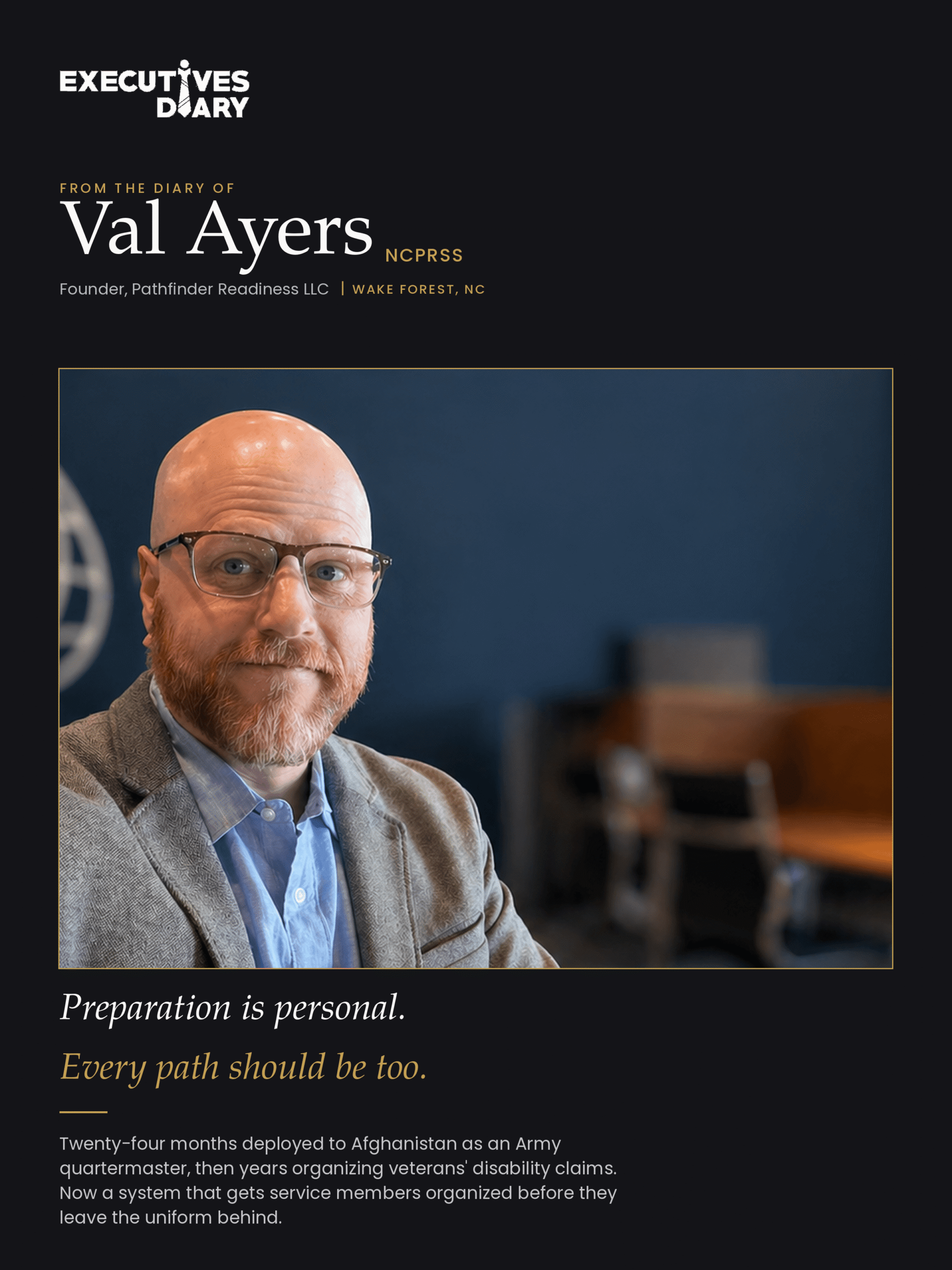
Preparation is personal. Every path should be too.
Each year, thousands of service members prepare to leave military service and begin a new chapter of life. Alongside career decisions, relocation, healthcare, education, finances, and family responsibilities, they must also navigate one of the most important administrative transitions they will ever experience.
The Department of Defense and the Department of Veterans Affairs provide valuable resources to support military transition, including programs designed to prepare service members for civilian life. While these programs establish an excellent foundation, every service member’s goals, circumstances, and plans are unique. A personalized approach to administrative readiness can help ensure those resources are used to their fullest potential.
For Val Ayers, Founder of Pathfinder Readiness LLC in Wake Forest, North Carolina, that understanding became the inspiration for a different approach to military transition. Rather than replacing existing programs, Pathfinder Readiness complements them by helping service members, veterans, and their families develop personalized Administrative Readiness Paths—organized, proactive plans designed to prepare individuals for the opportunities and responsibilities that follow military service.
Experience That Shaped a Mission
Val’s understanding of preparation began during his military service at Fort Drum, New York, with the 3rd Brigade Combat Team, known as the “Spartans.” During Operation Enduring Freedom, he deployed for approximately twenty-four months as a Quartermaster attached to the 2nd Battalion, 87th Infantry Regiment, supporting logistical and sustainment operations throughout Afghanistan. His deployment also included movement through Kuwait during both deployment and redeployment.
In 2008, Val transitioned from active duty into the U.S. Army Reserve, serving with the 535th Military Police Company in Apex, North Carolina. During that time, he also served as a VA Liaison, helping recently returned service members connect with Veterans Health Administration resources while gaining firsthand experience with the administrative responsibilities that accompany military transition.
Those experiences demonstrated that successful transitions are rarely defined by a single event. They are built through preparation, organization, and planning long before separation occurs.
A Career Built Around Administrative Readiness
Following military service, Val continued building experience across healthcare administration, business operations, and veterans’ disability law. His professional experience spans healthcare and business operations. He prepared medically necessary documentation for insurance authorizations and improved organizational processes as a business analyst.
From 2022 to 2025, Val worked with a private veterans’ disability law firm, where he organized service treatment records, reviewed medical evidence, identified documentation needs, and supported legal teams throughout the veterans’ disability claims preparation process.
Working directly with veterans, he helped them navigate comprehensive disability claims, Higher-Level Reviews, and appeals by drawing on both his professional experience and firsthand knowledge of the VA claims process. Across every role, one common theme continued to emerge: the greatest challenges were rarely caused by a lack of available resources. More often, individuals simply needed additional time, organization, and personalized planning to navigate increasingly complex transitions involving multiple agencies, systems, healthcare providers, employers, educational institutions, and personal responsibilities.
Those observations ultimately became the foundation for Pathfinder Readiness.
Designing Personalized Paths
Military transition is not a single checklist. It is a series of important decisions that continue well beyond the final day in uniform. Pathfinder Readiness helps clients build personalized Administrative Readiness Paths before separation by organizing critical documentation, identifying missing records, developing timelines, and creating structured systems that remain under the client’s complete ownership and control.
Military records, medical documentation, education records, certifications, employment history, financial records, and other important documents are consolidated into an organized, searchable structure designed around each client’s individual goals. The objective extends beyond the organization itself—it is about reducing uncertainty, improving confidence, and helping individuals move into civilian life prepared rather than reacting to administrative challenges after they arise.
Every Path Is Different
No two military careers are identical. Neither are two military transitions. A young enlisted Soldier returning to North Carolina after a first enlistment has different priorities than a retiring senior noncommissioned officer. A wounded service member faces different administrative needs than someone pursuing higher education or entrepreneurship.
For that reason, Pathfinder Readiness does not believe in one-size-fits-all transition planning. Every Administrative Readiness Path is tailored to reflect each individual’s:
Personalized Path Factors
- ■ Military history
- ■ Family circumstances
- ■ Future goals
- ■ Destination
- ■ Long-term objectives
Preparation is personal because every transition is personal.
Supporting Families Through Transition
Military transition affects more than the individual leaving service. It often involves spouses, parents, children, caregivers, and entire families preparing for significant change together. Pathfinder Readiness welcomes those trusted individuals as part of the planning process whenever the service member or veteran chooses to include them.
For example, parents living in North Carolina may purchase an Administrative Readiness Path for a son or daughter currently stationed at Fort Drum who plans to return home in six months. While the service member continues participating in programs such as the Transition Assistance Program (TAP), Pathfinder Readiness can begin organizing documentation, preparing state-specific planning, identifying local resources, and building a personalized roadmap before separation takes place.
Beginning early allows everyone involved to make informed decisions with greater confidence while reducing unnecessary administrative stress during an already significant life transition.
Complementing Existing Resources
Pathfinder Readiness is intentionally designed to complement—not replace—the outstanding work performed by military transition programs, Veterans Affairs, accredited representatives, healthcare professionals, educational institutions, employers, and veteran-serving organizations.
The goal is simple: help individuals arrive prepared. When records are organized, responsibilities are understood, and planning begins early, service members and veterans are better positioned to take full advantage of the resources already available to them. Administrative readiness strengthens every next step.
Looking Ahead
Military service teaches discipline, adaptability, and readiness under pressure. Val believes those same principles should continue through the military transition. Preparation should begin before separation, planning should reflect the individual, and every service member should have a clear administrative path that supports the life they are building beyond the uniform.
Through Pathfinder Readiness LLC, Val is helping service members, veterans, and their families design personalized Administrative Readiness Paths that strengthen military transition through organization, preparation, and confidence.
Because preparation is personal. Every path should be too.