

Josephine Desiree Rollyson
Founder @ Mental Health for Me, LLCA pregnancy complication once sent Josephine Desiree Rollyson driving herself to an American hospital in Germany, a child at home with her husband. A suspected heart attack later sent her husband driving himself in. It occurred to neither of them to call anyone, and by the standard the military hands its families, that was resilience: the task got handled, nobody became a problem. Rollyson, a licensed social worker who has lived that standard for a decade, reads it differently. “I don’t think two people independently driving themselves to emergency care because neither believes there is anyone they can call is evidence of a healthy support system,” she says. Strength was never what that family lacked. Infrastructure was.
Josephine Desiree Rollyson is the founder of Mental Health for Me, LLC, whose Key Spouse service at Ramstein Air Base earned wing-level recognition in 2021.
The Community Was Always There. Nobody Had Asked It for Anything
The chain, in Rollyson’s telling, runs backward from where mental health work usually begins: the clinic is the last link, not the first. She holds the three vantage points that people in this field typically hold one of, the clinician treating the person in the room, the coordinator running the base programs meant to catch that person earlier, and the military spouse living the part that never reaches a chart, the community rebuilt after every PCS, the labor nobody logs. Seen from all three at once, distress stops looking like a defect in the individual and starts looking like the end of a sequence of supports that failed first. “By the time someone seeks professional mental health care, they may already be thinking, ‘I can’t handle this on my own anymore.'”
That distance is rarely about whether help exists. Rollyson spent her MSW internship year staffing medical outreach for the Exceptional Family Member Program at Ramstein Air Base, coordinating medically driven reassignments, and she has watched the same enrollment work as a deterrent. “I have watched individuals hesitate or refuse services because they feared that seeking help could lead to an EFMP designation and potentially affect the service member’s career or future assignments.” A program can be real and still go unused, and the family quietly managing around it looks fine from every dashboard. “It can look like strength because the task still gets completed, but that doesn’t mean the person carrying it is genuinely well.”
Count the Need Before the Ask
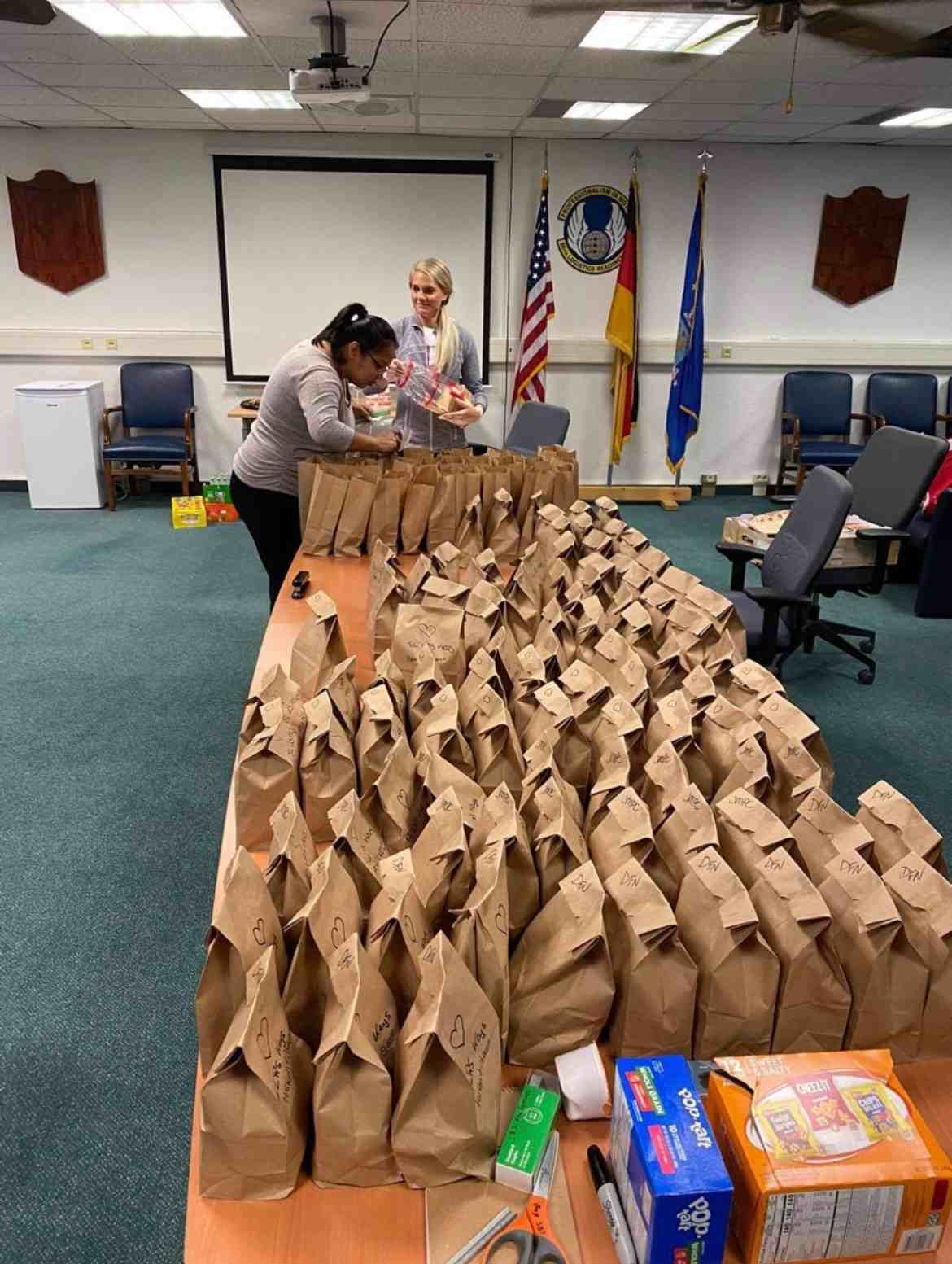
Her clearest proof that the capacity for something better already exists came during Operation Allies Refuge, the 2021 evacuation that ran through Ramstein. Airmen in the Logistics Readiness Squadron were working twelve-hour shifts on the flight line, some unable to leave their posts to eat, while the installation’s support organizations were overwhelmed by the scale of the response. Rollyson, serving as a Key Spouse for the squadron, pitched the commander on what became the Brown Bag Brigade, then went to the sergeants responsible for the three LRS units for the one number that mattered: how many Airmen were on each shift. The need was counted before anyone was asked to meet it. A conference room became a collection and assembly area. Key Spouses raised money for food through families and friends; she organized shopping trips, coordinated donations and meal assembly, bought food herself, and pulled in the Ramstein Enlisted Spouses’ Association and partners across the installation, extending support to Airmen outside the squadron as needs surfaced.
The effort coordinated approximately 1,200 meals over the course of the response, a figure built from the units’ shift requirements and the bags counted after each assembly session. A parallel campaign converted squadron rooms into collection points for Red Cross-requested supplies, clothing, diapers, formula, and moved approximately 6,000 donated items to the First Sergeant Association for distribution. “What surprised me wasn’t that the military community responded. It was how quickly and generously people responded once there was a clear way to help.” Which is also her indictment of the ordinary state of things: “A crisis shouldn’t have to be the mechanism that activates a community.”
The Same Move, Without an Emergency to Force It
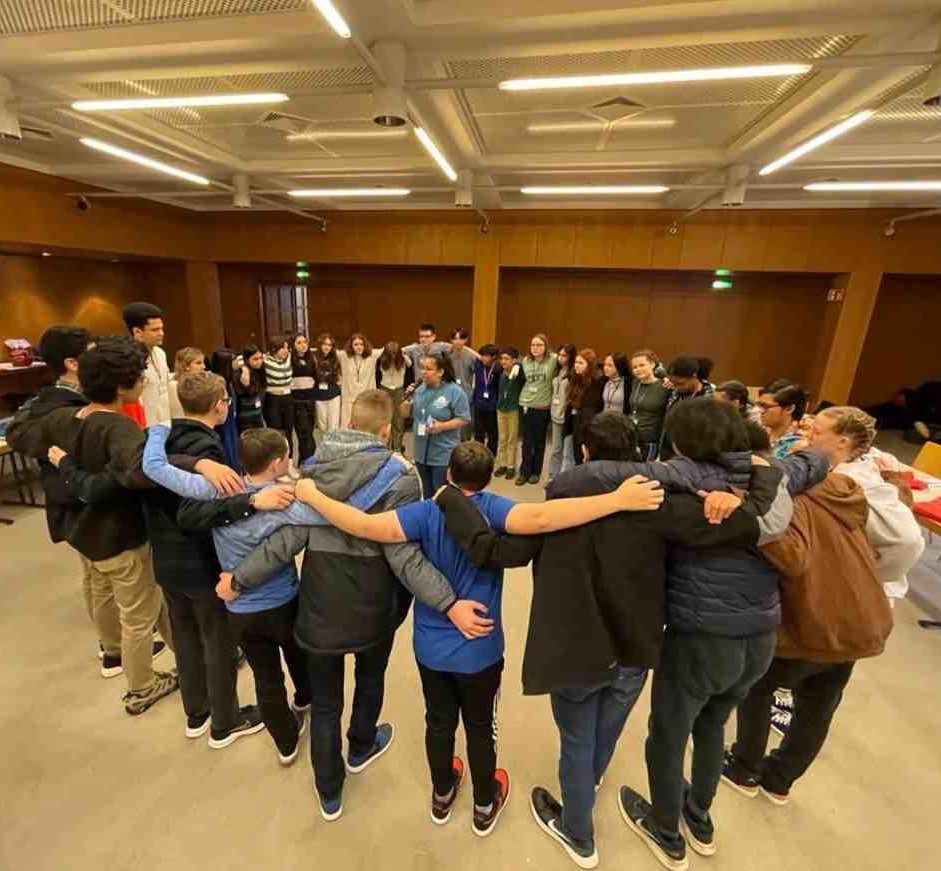
The obvious objection is the one Rollyson raises herself: an emergency did the organizing. Operation Allies Refuge made the need undeniable, and undeniable needs recruit their own volunteers. So the test is whether the same sequence works on an ordinary calendar, and she had already run it there. As coordinator of the Catholic religious education program at the Ramstein chapel, she inherited the standing problem of parish programming everywhere, a small volunteer base carrying everything. Instead of pressing the same volunteers harder, she widened who was asked: adults, post-Confirmation teens, music ministry members, people adjacent to the program who had never been handed a role in it. The program went on to bring together 75 youth from five European military installations for its first collaborative Confirmation weekend retreat.
Line the two programs up and little survives as an alternative explanation. The installation was the same. The person was the same. One effort ran on the urgency of an international emergency; the other ran on a parish calendar. What did not vary was the sequence: find the capacity nobody has asked for, shape a specific ask, and hand out roles instead of absorbing them. “We demonstrated that the capacity existed. The harder question is how to build that same willingness to show up before someone’s need becomes an emergency.”

What Commanders and Program Officers Can Steal From a Community That Was Never Asked
Four moves are portable to any commander, program officer, or employer responsible for a population under strain.
Four Portable Moves
- First: count the need from the people who already hold the number. The Brown Bag Brigade started with shift rosters from three units, not a guess, and every ask that followed was sized to them.
- Second: shape the ask so people can answer it with what they already have. “People who couldn’t work on the flight line found another way to support the people who could.” The design decision was giving them that way.
- Third: distribute roles rather than absorbing them. In her practice the principle carries the name collaboration: “no single person, profession, or organization can meet every human need, so healthy support requires people and systems that know their roles and are willing to work together.”
- Fourth: budget for connection in ordinary time, because the bill is real. “It costs time to build relationships before we need them. It costs leaders the willingness to know their people beyond whether the mission is getting accomplished. It costs organizations resources to create support that people can actually access and trust.” Her own revision of the Brown Bag Brigade is the same instruction: identify which relationships formed, create clearer pathways to ask for and offer help, and maintain them when nothing is wrong.
Asked what she would say to a military spouse who has been told to be resilient and has nothing left to be resilient with, Rollyson answers in one sentence:
Who Is Josephine Desiree Rollyson, the Clinician Who Works on the System Around the Client?
Josephine Desiree Rollyson is the Founder and Lead Consultant of Mental Health for Me, LLC, a mental health coaching, consulting, and speaking practice based at Wright-Patterson AFB, Ohio, and a licensed social worker named a Salisbury University MSW Student of the Year in 2024. She is a licensed social worker practicing as a therapist under clinical supervision in a school setting, with a separate non-clinical coaching practice.
The license sits on top of roughly a decade lived inside the systems she now works on. As a military spouse at Scott Air Force Base and then Ramstein Air Base in Germany, she coordinated Catholic youth and religious education programming for base chapels, served as a Key Spouse for the 86th Logistics Readiness Squadron, and spent her MSW internship year as a special needs outreach coordinator for the Exceptional Family Member Program’s medical branch. She completed her Master of Social Work at Salisbury University in May 2024, holds a bachelor’s degree in psychology from Texas A&M University-Corpus Christi, and completed the Institute for Trauma Treatment in Schools at Simmons University in 2025. At TCN Behavioral Health Services in Ohio, she carried an active caseload that reached more than 95 clients at any given time as a mental health therapist specializing in intellectual and developmental disability and neurodivergent disorders in youth and adults. She now serves as a mental health therapist with the University of Dayton’s ECHO program, providing direct treatment and crisis intervention for students aged four to twelve and their families. Through the practice and independently, she has delivered mental health education for the Foreign-born Military Spouse Network and the Military Spouse Advocacy Network, and sat on Key Spouse panels at the USAFE Commander Course three times across 2021 and 2022. Her Catholic faith informs the values underneath the work, though the argument is addressed to communities of any belief and none. Mental Health for Me operates independently of her clinical employment, and nothing in her advocacy speaks for her employers, the Department of Defense, the U.S. Air Force, or the organizations she volunteers with but has informed how she sees and supports those in need.