
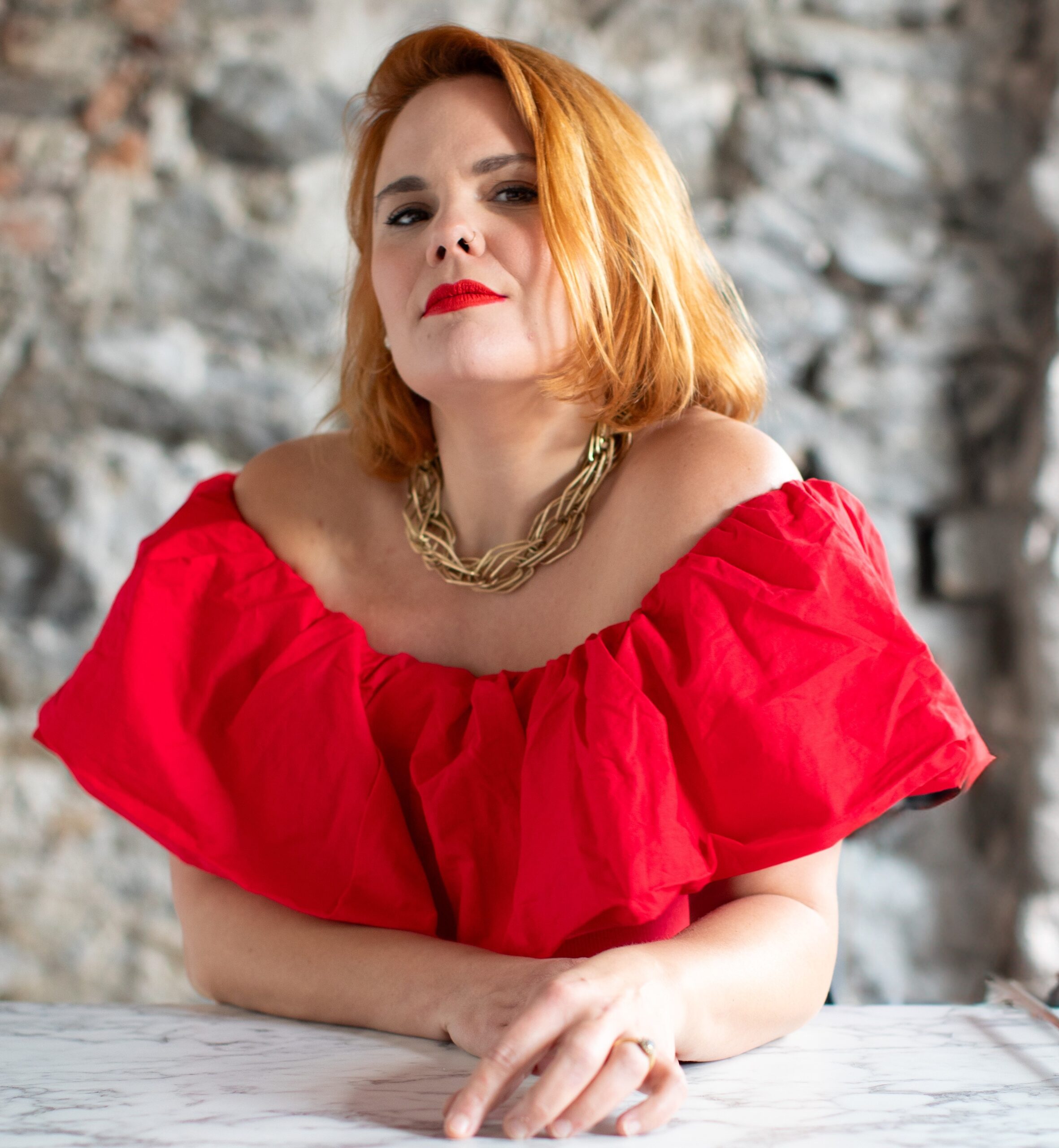
Based in Kingston upon Hull, England, Sophie Jane Lee is the founder of Electric Peach, a brand storytelling consultancy working with purpose-driven brands, founders, SMEs, social enterprises, charities, and nonprofits. Over 17 years, she has shaped stories for organizations including Disney, L’Oréal, The Huffington Post, the United Nations, and WPP, while working across brand, marketing, business and financial journalism, digital communications, PR, content strategy, public speaking, and leadership development. An NCTJ-qualified journalist by training, Lee describes story as her “operating system.” Her work now extends far beyond traditional brand storytelling. She helps founders find their voice, supports leadership teams in communicating with clarity, trains organizations in storytelling, and works with women around visibility, self-expression, and authority. At the center of it all is a belief that “people don’t connect to information; they connect to feeling.” For Lee, the brands and leaders that matter are not necessarily the loudest. They are the ones capable of creating meaning, trust, recognition, and a sense of connection.
There is a particular kind of silence that happens when someone has something important to say but has learned, somewhere along the way, to make it smaller. It can happen to a founder who keeps refining her message until there is barely any personality left in it. To a leader who knows what she believes but hesitates before saying it aloud. To a brand with a meaningful purpose that communicates perfectly on paper and yet fails to make anyone feel anything.
And sometimes, the problem is not that the story is badly told. It is that the wrong story is being told.
Sophie Jane Lee has spent much of her career exploring that distinction. Her journey began with a love of writing, took her through teaching in Prague, communications at Disney English in Shanghai and journalism at Shanghai Daily, and eventually into brand strategy, entrepreneurship, public speaking, and authorship. Along the way, she discovered that storytelling is not simply a marketing discipline. It is a force that shapes identity, culture, trust, leadership, and the way people understand one another.
Today, as founder of Electric Peach, an award-winning brand strategist, writer, Forbes-featured keynote speaker, author, business mentor, and communications advisor, Lee is building her work around a deeper proposition: before people and organizations can communicate powerfully to the outside world, they need to understand what they are communicating from within.
Where the Story Began
Sophie grew up in Hertfordshire and studied English and Creative Writing at the University of Hull. When she graduated in 2008, the recession had arrived at precisely the wrong moment. The career she had imagined simply was not available.
“There were no jobs and I didn’t fancy becoming a postman,” she recalls.

So she left the UK for Prague, where she taught English to the Czech Government. The move was practical, but the ambition underneath it remained unchanged. Lee had always wanted to make a living through writing, and teaching became a way of moving through the world while continuing to search for an opening. Two years later, she moved to Shanghai and joined Disney English. Initially working in internal communications, she liaised with other China-based cities, helped maintain brand consistency, and worked with Chinese colleagues to create monthly digital magazines for staff, students, and parents. But she wanted to write. So she began pursuing Shanghai Daily, Shanghai’s only English-speaking publication at the time, with a level of persistence that would become characteristic of her career.
“On every day off, I’d turn up at the newsroom and ask for a column.”
Eventually, she got one. One column became a weekly feature. The weekly feature became a double-page spread. Eventually, Lee was writing front-page cover stories.
“Without ever planning it, I’d become a journalist.”
It was a turning point, but not because of the title. Journalism gave Lee something more valuable: a way of looking at people. Living and working in China exposed her to people whose lives, beliefs, cultures, and experiences differed significantly from her own. Rather than approaching those differences with assumptions, she learned to ask questions.
“Journalism gave me permission to ask questions rather than make judgements.”
That lesson became one of the intellectual foundations of everything that followed.
When Story Became the Problem
Journalism taught Lee how stories shape public opinion. Her subsequent work in communications taught her how stories shape organizations. Writing Beyond Palatable: A Manifesto for Unapologetic Women and working in the space of voice and visibility took the idea somewhere more personal. Stories shape identity. That realization changed the question she was asking.
Communication, Sophie began to understand, was not simply about getting attention, selling a product, or creating visibility. It was about the narratives individuals, organizations, and societies construct about themselves, and what happens when those narratives become limiting.
“When people lose trust in their own voice, they become easier to influence. When organisations communicate without clarity or courage, trust erodes. And when societies lose the ability to have nuanced conversations, we stop trying to understand one another altogether.”
This is where her work begins to feel less like conventional marketing and more like an examination of the emotional and psychological forces underneath communication. The question is no longer simply, “What should we say?” It becomes, “Why are we saying this? What do we believe about ourselves? What have we decided we are allowed to say? And whose voice is missing?” Lee became increasingly interested in what happens before communication.
“We spend a lot of time teaching people how to tell better stories, but very little time asking whether they’re telling the right ones.”
That tension became the foundation of her philosophy.
Inside-Out Storytelling
Lee calls her approach inside-out storytelling. The idea is deceptively simple: understand the story you are already living, and the story you want to live into, before deciding which story you want to tell the world.
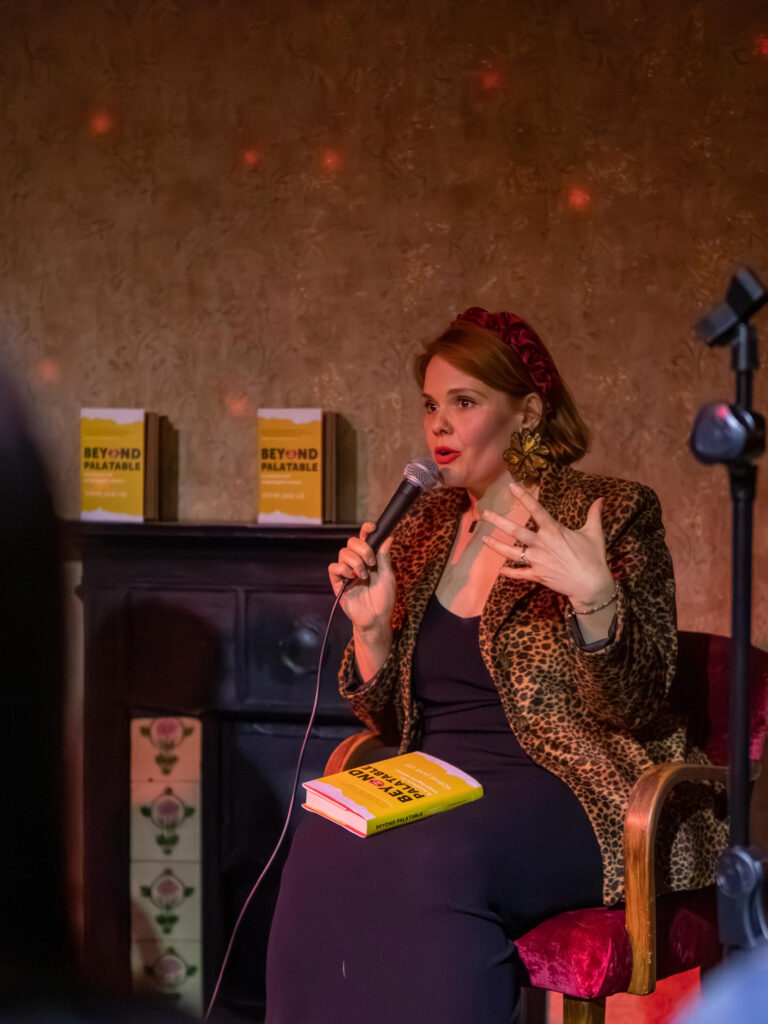
Whether she is working with a leadership team shaping an institutional narrative or helping an individual find the confidence to step onto a stage, Lee sees a similar process. It begins with awareness, moves through accountability, creates space for authentic expression, and ultimately leads toward expansion. For her, communication is therefore not an afterthought that happens once the strategy is finished. “Communication is one of the most important, yet often overlooked, tools we have as humans.” Her philosophy is grounded in curiosity, courage, and integrity. Curiosity remains her starting point because certainty closes conversations while curiosity opens them. Courage, meanwhile, is not the absence of fear.
“Bravery suggests fearlessness. Courage means doing the important thing despite fear. It’s something we cultivate, not something we’re born with.”
That distinction matters particularly in a time when public conversation is becoming increasingly polarized. Lee points to social media’s preference for certainty over nuance, algorithms that amplify outrage, and political discourse that encourages people to see opposing teams rather than shared humanity. Her answer is courageous communication. Not louder communication. Not more polished communication. Communication with enough honesty, empathy, and integrity to keep people in the room.
“It isn’t about speaking louder; instead, it’s about communicating with enough honesty, empathy and integrity that people remain willing to stay in the conversation.”
Electric Peach: Turning Philosophy Into Practice
In 2017, Lee and Alice Reeves founded Electric Peach after becoming frustrated with how marketing and advertising could exploit people’s insecurities. They wanted to use those same tools differently. Electric Peach evolved into a decentralized brand and marketing collective, bringing together senior specialists from across the industry and assembling teams around each client’s needs without the overheads of a traditional agency.
Its work spans the full brand journey: positioning, audience research, messaging, visual identity, communications, websites, SEO, campaigns, social media, events, podcasts, community management, training, and sales storytelling. Clients have included the United Nations, Panasonic, BIMM, Kingston University, Girls in Marketing, Hastings Contemporary, TravelMaster, Hisbe, Tilt, mdgroup, and Horizon. The results speak for themselves. Electric Peach cites 300% growth for mdgroup over four years and growth of up to 400% for for-profit businesses. But commercial success is only part of the story.
The collective works exclusively with organizations committed to meaningful change. It has donated more than 10% of its profits to causes it believes in, operates a buy-one-give-one model through B1G1, and says it has generated hundreds of thousands of impacts aligned with the UN Sustainable Development Goals. It also supports charities and nonprofits through discounted rates and previously held B Corp certification with a score of 107.
Electric Peach’s philosophy extends to challenging purpose-washing, manipulative marketing, outdated industry practices, unpaid internships, and narrow ideas about who belongs in the creative world. For Lee, responsible influence isn’t just a principle, it’s the point of the work.
Making Visibility Mean Something
What if becoming more visible didn’t mean becoming someone else? That question sits at the heart of Sophie’s work. As her thinking evolved, she began applying the same principles she brought to brands to individuals, helping founders and female entrepreneurs become more visible, communicate with confidence, and tell their stories without turning themselves into a carefully manufactured version of what they think the world wants to see.
Her Brilliant mastermind was created for female founders with “big, beautiful ideas” who want to grow their businesses and visibility without losing their authenticity, sanity, or soul. The program is built around five cornerstones: Inner Grounding, Story, Strategy, Stage, and Expansion. It combines teaching, coaching, and consultancy in six-week cycles, with deliberate integration periods designed to prevent burnout and overwhelm. Somatic practices and nervous-system regulation run throughout the work.
The experience includes a one-to-one intensive covering messaging and offer strategy, weekly calls, a small-group community, feedback, guest masterclasses on ethical sales, becoming a published author, creating events, style, pitching and TEDx, two in-person days including a photoshoot, public-speaking opportunities, introductions, templates, and ongoing support. A second tier adds one-to-one coaching.
Alongside Brilliant, Lee offers brand storytelling workshops, communications audits, campaign marketing, public-speaking training, bespoke communications development, university-level storytelling lectures, brand storytelling consultancy, and storytelling for sales professionals.
Her signature workshop has supported organizations including Panasonic, the UN, BIMM, Kingston University, and Girls in Marketing. At its core, the work is about sustainable visibility: being known for what you do without sacrificing who you are in the process.
Beyond Palatable and the Question of Self-Expression
The most personal expression of Sophie’s philosophy is Beyond Palatable: A Manifesto for Unapologetic Women. The book explores self-expression, nervous-system safety, identity, and the cost of shrinking ourselves to fit social expectations. Part story, part social commentary, part reclamation, it speaks to women who are finished with diluting themselves.
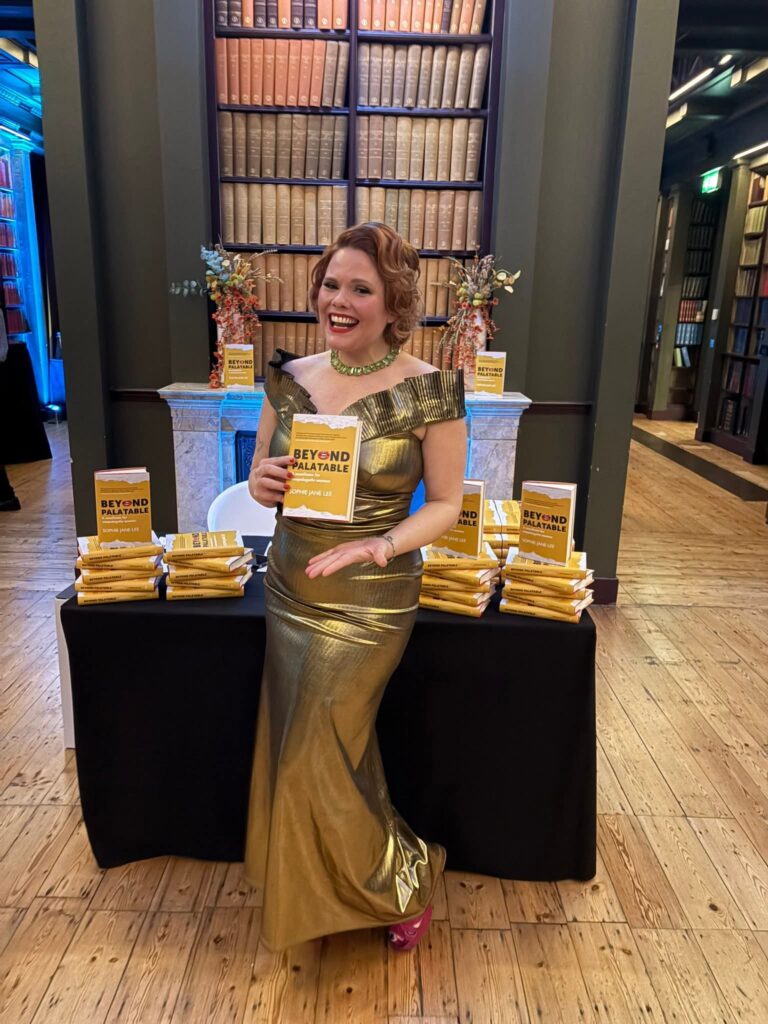
The subject connects directly to Lee’s broader work. A brand can have a messaging problem, but an individual can have something more fundamental: a story about herself that tells her she should remain quiet. Lee’s work in voice and visibility is therefore not simply about becoming more visible. It is about becoming more willing to be fully expressed.
That principle is reflected in the experiences shared by participants in her work. One client described Brilliant as having changed both her life and business after tripling her prices. Another said Lee helped her return to LinkedIn and, more importantly, return to being herself. A client from the Chartered Institute of Ecology and Environmental Management described Lee’s approach as hands-on and strategic, while another called her “a master of her craft.”
A Wider Leadership Voice
Sophie’s story is not simply one of accumulating titles, it’s a journey through the many ways people, businesses, and ideas learn to communicate. Her influence now extends well beyond brand consultancy. As a business mentor with Enterprise Nation, she has worked with SME leaders navigating growth and change, while also bringing her experience into the boardroom as a non-executive director and Trustee of Recovery Connections.
Long before Electric Peach, Sophie built her expertise from the ground up. At Bozboz, she progressed through content and digital marketing into senior content and PR roles, eventually leading a team of seven and working with organizations including Amnesty International, YMCA, WEConnect International, fastjet, mdgroup, Jeremy Paxman, and Maslen Estate Agents. Earlier chapters included freelance writing, marketing consultancy, work with the Brighton and Hove Chamber of Commerce and Crunch Accounting, and editorial and communications roles in Shanghai.
Her writing has appeared in The Guardian, Real Business, The Huffington Post, O Desk, and Copyblogger, alongside columns for business and finance publications. She holds an MA in Multimedia Journalism from the University of Sussex, an NCTJ journalism qualification, and a BA in English with Creative Writing from the University of Hull, as well as qualifications in data journalism, TESOL, and TEFL-C. She also speaks Chinese. But the value of this experience isn’t the length of her résumé, it’s the perspective it has given her: how people consume information, how organizations shape identity, how brands earn attention, and how communication can build genuine connection rather than distance.
That understanding now sits at the heart of everything Sophie does.
Redefining Communication
Sophie’s future vision reaches far beyond storytelling as a professional service. “I want to change the way businesses understand communication, not as something they produce, but as something that shapes how they lead, connect and create change.”
She believes communication has traditionally been treated as the final stage of a process, something that happens once a strategy has been written, a product has been built, or a decision has already been made. She believes that approach is backwards.
“Communication doesn’t simply describe reality; it shapes it.”
The conversations people have influence relationships. The stories organizations tell shape culture. The narratives societies repeat determine whose voices are heard, which ideas gain traction, and which futures appear possible. For Sophie, courageous communication means expressing what you believe to be true while remaining open to the possibility that your truth may not be the whole truth. It requires humility. Critical thinking. The ability to listen. And the willingness to allow disagreement to deepen understanding rather than automatically becoming division.
Through Electric Peach, public speaking, and Beyond Palatable, Lee wants to help individuals and organizations communicate from the inside out by developing a deeper understanding of who they are, what they stand for, and the impact they want to have.
The Sophie Jane Lee Perspective
Communication, in Sophie’s view, begins long before the words arrive. It starts with listening before deciding, questioning what we think we know, and understanding before trying to influence.
Powerful communication isn’t about having the perfect words or the loudest voice. It’s having the courage to contribute without certainty, disagree without dehumanising, and build visibility without turning authenticity into performance. And it means recognising that influence carries responsibility. That belief shapes the legacy she hopes to leave:
“I hope more people, particularly those whose voices have been dismissed, underestimated or made to feel inconvenient, trust that their perspective has value. That they question what they’ve been taught to accept, contribute without needing all the answers, and use their influence to make more room for others.”
It brings her story back to where it began: a young woman from Hertfordshire, repeatedly walking into a Shanghai newsroom on her days off and asking for the chance to tell stories.
The scale has changed. The instinct hasn’t.
Ask. Listen. Question. And trust yourself enough to contribute.
The Sophie Jane Lee Playbook: 5 Lessons in Courageous Communication
- Lead With Curiosity: Approach people and problems with questions before conclusions. Curiosity creates space for better understanding and more meaningful conversations.
- Examine the Story Beneath the Message: Before changing how you communicate, understand the beliefs, assumptions, and narratives shaping what you are saying.
- Choose Courage Over Comfort: Meaningful communication requires the willingness to say what matters, even when uncertainty or fear makes silence easier.
- Build Visibility From Self-Awareness: Sustainable influence starts with knowing who you are, what you stand for, and the impact you want to create, not with performing a version of yourself.
- Keep People in the Conversation: Communicate with enough honesty, empathy, and integrity to make room for disagreement, critical thinking, and deeper understanding.
Editorial Note
Sophie Jane Lee’s work brings storytelling, leadership, self-expression, and communication into the same conversation. Through Electric Peach, Beyond Palatable, and her work with founders and organizations, she continues to advocate for communication rooted in curiosity, courage, and integrity. Her enduring message is simple: meaningful influence begins when we understand the story within before we ask the world to hear the story beyond.